
Construction in Canada: What is the future of the industry?

In 2022, there were 252 large infrastructure projects under development valued at over 25 million U.S. dollars. In general, the construction industry is an important economic driver for Canada as well as an indicator of the strength of the nation’s economy. Canada is widely recognized as one of the world’s largest markets for commercial, residential and infrastructure development.

The global pandemic slowed down the construction industry’s growth to some extent; however, the sector has jumped back significantly in 2021 due to economic recovery. The industry represents 7.5% of the country’s economic activity and employs nearly 1.4 million Canadians. And the situation will not change in the near future, there is no shortage of big construction projects on the Horizon.

From the public to the private sector, high-value projects continue to break ground at a steady pace. With a variety of construction projects in different sectors such as the 16-km Ontario subway Line; Go Expansion, a project to rehabilitate and renew the railway transit corridor and civil infrastructure; or the refurbishment project at Darlington Nuclear Generating Station to keep performing the 3.512 MW power plant on its peak. It is possible to see that a great part of the highly developed Canadian economy rests on the Vibrant Canadian Construction Industry.

The construction sector is poised for growth near 5% in the coming years, creating spaces for new workers or innovations. According to BuildForce Canada’s national report, Construction and Maintenance: Looking Forward (2021–2030), while most of the sector’s growth is expected to occur by 2025, all industries across the province will have to replace close to 259,100 workers by the end of the decade due to retirements (22% of the current workforce). The same report also forecasted that construction employment is expected to rise by 64,000 workers over the next ten years.

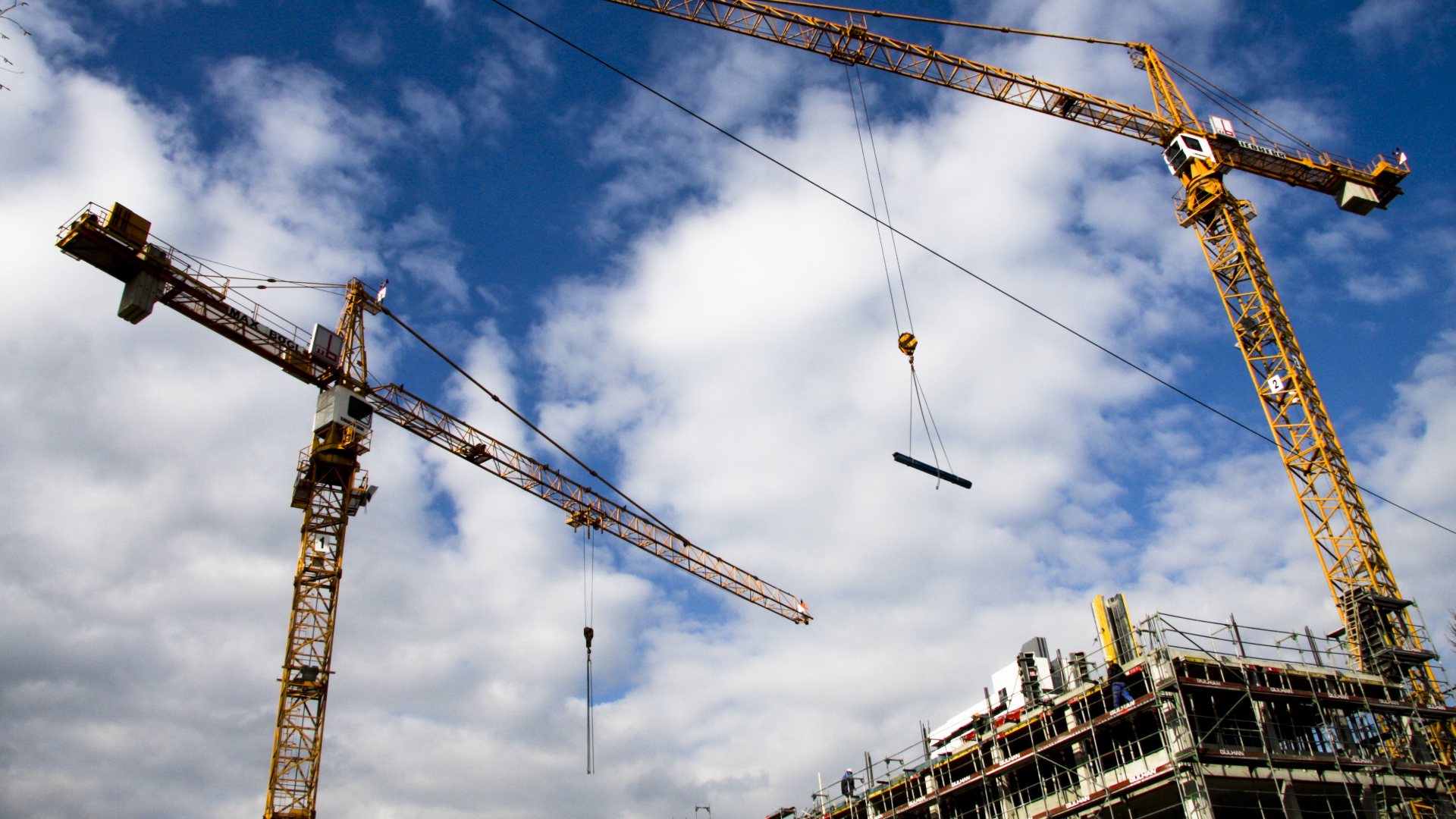
Embracing this situation, the Canadian Construction Association carry out a study together with KPMG to see how construction enterprises are preparing for future demands. Most companies have little interest and incentives to invest in new technologies, leaving the risk management and costs in hands of their contractors. The majority consider the implementation of technologies such as Big Data, additive manufacturing, or robotics in construction as mere experiments, or it will not produce any leverage in the organization. This does not mean in any case that the industry is not adopting other technologies like Cloud or Cyber Security, but the slow promotion of recent innovations in the industry could be given by the traditional existent bureaucracy in the large enterprises, and the low power of decision in middle and upper-middle management.

On the other hand, the size of an organization need not be a limiting factor, either. Small and medium-sized companies can consider partnering with specialized firms to give them access to a broader range of expertise and help drive their transformation. In fact, smaller companies are often in the enviable position of being more nimble than larger ones. There is no doubt that a wave of technological disruption has started to transform construction firms around the world into new ways of operating, and the Canadian market will not be exempt from these trends. 

The moment for innovative SMEs is here. You would not want to miss the chance to have access to one of the largest construction countries in the world. In that case, do not hesitate to contact TRANSFER.LC, your Global Business Consultant.

Get in Touch!

If you are interested in this country, or you would like to expand to one of the other main markets in the Americas or Europe, contact us via the form, and we will get back to you shortly.

    Related

    Trending Blog

    EU-Mercosur: What European Businesses Need to Know

    The EU-Mercosur agreement marks a significant shift in trade relations between Europe and South America. While full implementation will take time, the deal has clear implications for European companies in terms of market access, costs, regulatory conditions and supply-chain strategy. This article outlines what is changing, when it may start to matter, and which businesses stand to benefit most.

    29/01/2026

    Powering the Future: Offshore Wind Innovation in the Benelux

    Rising energy costs, geopolitical uncertainty, EU climate targets, and global supply chain competition make offshore wind innovation in the Benelux more critical than ever. The Netherlands and the wider region are emerging as a global reference for offshore wind, combining ambitious long-term capacity plans with a mature supply chain and a strong export record across Europe, Asia, and the Americas. This article explains how Benelux is combining policy, technology, and international partnerships to build the next generation of offshore wind.

    10/12/2025

    France: Market Opportunities for Foreign Companies in Water, Energy, and Environment

    France’s sustainability sectors are experiencing rapid growth, creating significant opportunities for foreign companies in water treatment, renewable energy, and circular-economy solutions. With ambitious national targets for decarbonization, water management, and resource efficiency, France is positioning itself as a European hub for environmental innovation and market expansion. This article explores the key market opportunities, sector trends, and areas where international companies can contribute to France’s green transition.

    17/10/2025