


Introduction: When More Isn’t Better
In an increasingly interconnected world, many exporters face the same core question: “Which countries should we focus on?” With dozens of trade shows, hundreds of leads, and rising website inquiries, it’s tempting to pursue every opportunity. But experience and data suggest a more deliberate approach: concentrated market focus.
Recent global trade developments highlight this need. According to the World Trade Organization’s latest Global Trade Outlook and Statistics report, global merchandise trade growth is expected to slow sharply to about 0.5 % in 2026, down from 2.4 % projected for 2025, largely due to tariff measures and heightened policy uncertainty. Simultaneously, growth in AI‑related goods and front‑loaded shipments helped cushion trade in 2025, but the 2026 outlook remains subdued.
This global backdrop makes one thing clear: more isn’t always better. Instead of reacting to every trend or request, successful exporters commit to structured country selection. Focus fuels faster, more resilient growth, even amid global disruption. And 2026 is an ideal moment to reassess your export priorities in light of these evolving conditions.

The Overchoice Challenge: Why Exporters Must Learn to Say No
International fairs, digital platforms, and government missions present companies with abundant opportunities. It is not unusual to return from an event with hundreds of leads. But responding to every contact is neither sustainable nor strategic, especially in a world where trade growth is slowing.
The tendency to be “everywhere at once” is particularly strong among small and mid‑sized enterprises (SMEs). However, research and export behavior analysis among Dutch exporters show a clear pattern: companies that narrowed their focus to fewer markets achieved more consistent and structural growth.
This mirrors the classic 80/20 rule: rather than spreading resources across many markets, firms that go deep in a select few typically see the majority of their long‑term gains come from that focused subset. Taking a “one new market at a time” approach also yields better learning and more effective expansion over time, which is a key pillar for successful 2026 export plans.
A Practical Market Expansion Tool
Strategic market selection isn’t guesswork; it is a repeatable process. The following framework can be part of annual export planning and applied by teams of all sizes.
✳️ Step-by-Step Approach:
1) Identify a preliminary long list
Include existing export markets, regions with strong inbound interest, and other potential geographies worth investigating.
2) Define market drivers
Choose up to ten factors that shape market appeal, such as:
- Market size and demand potential
- Competitive landscape
- Availability of sales and distribution channels
- Regulatory complexity
- Import tariffs and trade policy
- Cultural fit
- Trends and market dynamics
- Distance and logistics
- Existing contacts or networks in that market
- Political setting
3) Assign weighted scores
Score each market across the drivers using research and team collaboration rather than intuition alone.
4) Prioritize markets
Divide countries into:
- Group 1: Full focus – strategic core markets
- Group 2: Moderate attention – nurture or monitor
- Group 3: No current action – for future review
5) Plan and act
Develop tailored activity plans per group, ensuring resources are concentrated where they matter most. No activities should target Group 3 unless they are reclassified.
6) Re‑evaluate regularly
Market conditions shift rapidly: revisit your selection at least annually, especially after major events such as tariff changes or geopolitical disruptions.
This structured process helps exporters justify their focus and explain why certain leads, however promising, are not pursued.

Focus Leads to Faster Growth: Lessons from Dutch Export Trends
Insights from the Dutch Trade in Facts and Figures 2025 data show why local focus pays off. Despite global volatility, Dutch exporters continued to concentrate on nearby markets and maintained robust performance.
Some key facts:
Some key facts:
-
- The Netherlands is the EU’s second‑largest exporter of goods, after Germany.
- Dutch exports grew notably in early 2025, led by a significant increase in shipments to the United States, reflecting resilient demand.
Exporters overwhelmingly see Europe as strategically important: a majority identify it as the most promising region for both the medium (3–5 years) and long term (5–10 years). This aligns with the broader trend that nearby markets often offer more predictable growth and a stronger base for expansion.
Many Europe‑based exporters are tempted by distant markets, but data shows that export activities in nearby “low‑hanging fruit” markets often remain insufficiently structured or optimized. Focusing first on optimizing these can yield faster, more stable growth.

2026 Focus Areas: Where the Opportunities Lie
Given the current global and regional trade context, Dutch exporters are advised to take a tiered approach in 2026.
🇪🇺 Tier 1 – Core EU Markets
Germany, Belgium, and France remain top export destinations, jointly accounting for a significant portion of Dutch export value. Shared standards, strong logistics, and regulatory alignment make these markets especially valuable in an environment where global trade growth is modest.
🌍 Tier 2 – Southern and Eastern Europe
Spain continues to show solid economic momentum and domestic demand, while Poland and Romania stand out due to strong growth reforms and EU integration. These markets reward exporters who invest in local relationships and adaptation.
🇬🇧 🇺🇸 Tier 3 – Selective Entry
The UK and U.S. remain attractive but complex. New tariff regimes and trade policy uncertainty, reflected in the WTO’s lowered global trade outlook for 2026, mean these markets are best pursued by experienced exporters with strong local partners or differentiated offerings.

Pitfalls in Country Selection
Even well‑resourced exporters can misstep by:
- Prioritizing too many markets
- Relying primarily on gut feel
- Pursuing leads without strategic fit
- Excluding key teams from planning
- Failing to translate selection into execution
- Not revisiting priorities as conditions change
Export success is not about entering more countries; it is about winning in the right ones.

From Strategy to Execution in 2026
With your priority markets defined, 2026 should be about disciplined execution. Evaluate countries consistently, cluster them into meaningful tiers, and integrate your conclusions into a focused export plan. Remain attentive to geopolitical shifts, policy changes, and supply chain dynamics that continue to influence competitiveness.

Focus Is a Strategy – Not a Constraint
The exporters who thrive in 2026 will be those who resist the temptation to be everywhere at once. Instead, they will build depth, create lasting value in priority markets, and expand selectively.
Strategic focus is not a limitation – it is a competitive advantage.
📚 References
- AP News. (2024, December 9). Spain projected to grow at 3.1% GDP in 2024. https://apnews.com/article/spain-economy-growth-forecast-2024-bank-45be4f8c32545f9e510c95e65dcf3c4a
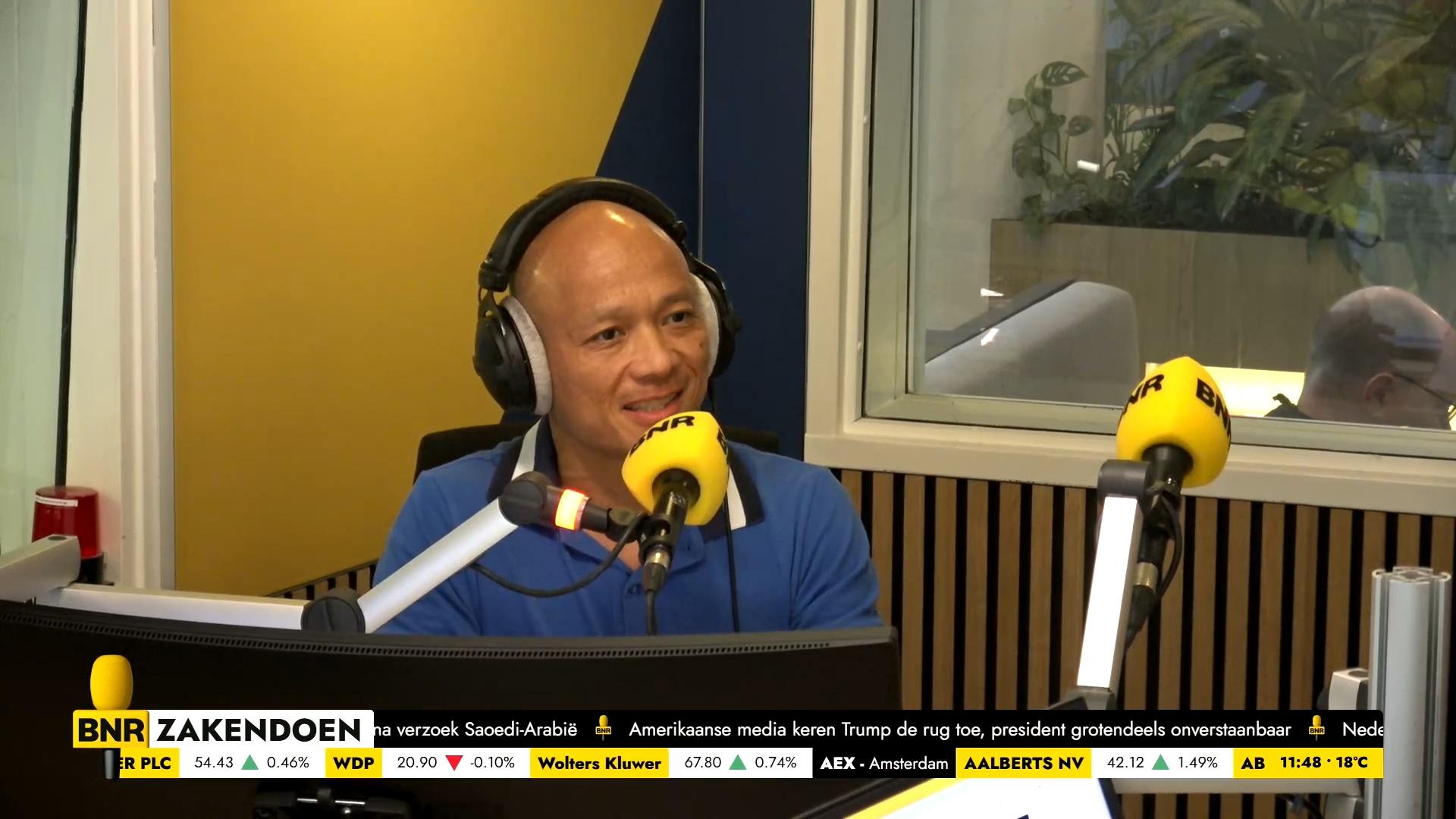
- BNR Nieuwsradio. (2025, January 14). Interview with Gerald Baal: TRANSFER.LC CEO on international market focus and export strategy [Audio recording]. BNR Zakendoen.
- CBS. (2025). Netherlands is second-largest exporter and importer of goods in EU. https://www.cbs.nl/en-gb/news/2024/17/netherlands-is-second-largest-exporter-and-importer-of-goods-in-eu
- European Commission. (n.d.). European Green Deal. Retrieved December 16, 2025, from https://ec.europa.eu/info/strategy/priorities-2019-2024/european-green-deal_en
- evofenedex & Atradius. (2024). Dutch Trends in Export 2024–2025 (Translated Summary). [Report retrieved from BNR Zakendoen 24dec24 and 14jan25 – Trends in Export Summary internal archive].
- MarketWatch. (2024, December 10). Here’s what’s expected to drive gold’s performance in 2025. https://www.marketwatch.com/story/heres-whats-expected-to-drive-golds-performance-in-2025-1a6148bd
- NL Times. (2025, September 15). Dutch exports to US rise 10.5% in first half 2025 despite trade pressures. https://nltimes.nl/2025/09/15/dutch-exports-us-rise-105-first-half-2025-despite-trade-pressures
- Reuters. (2024, December 9). 2024 will be hottest year on record, EU scientists say. https://www.reuters.com/business/environment/2024-will-be-hottest-year-record-eu-scientists-say-2024-12-09/
- Reuters. (2024, December 10). The year of elections in photos. https://www.reuters.com/wider-image/2024-year-elections-photos-2024-12-10/
- UNCTAD. (2024). Global trade set to reach new high, opportunities and challenges for developing economies. https://unctad.org/press-material/global-trade-set-reach-new-high-opportunities-and-challenges-developing-economies
- Vox. (2024, December 10). Donald Trump, artificial intelligence, Syria, Gaza: What mattered in 2024. https://www.vox.com/future-perfect/391021/donald-trump-artificial-intelligence-syria-gaza-2024-election
- World Trade Organization. (2024, March). Trade forecast revisions. https://www.wto.org/english/news_e/news24_e/forecast_update_march24_e.htm
- World Trade Organization. (2025, October 7). Global Trade Outlook 2025–2026. https://www.wto.org/english/news_e/news25_e/stat_07oct25_e.htm
Get in Touch!
If you are interested in this country, or you would like to expand to one of the other main markets in the Americas or Europe, contact us via the form, and we will get back to you shortly.
Related
Trending Blog
Why do we always look to London for business opportunities in the UK, when the actual industry lies elsewhere?
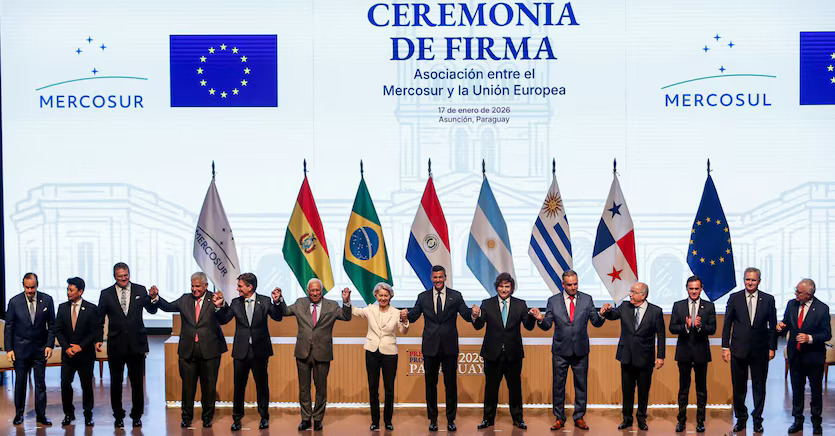
EU-Mercosur: What European Businesses Need to Know
The EU-Mercosur agreement marks a significant shift in trade relations between Europe and South America. While full implementation will take time, the deal has clear implications for European companies in terms of market access, costs, regulatory conditions and supply-chain strategy. This article outlines what is changing, when it may start to matter, and which businesses stand to benefit most.
29/01/2026

Powering the Future: Offshore Wind Innovation in the Benelux
Rising energy costs, geopolitical uncertainty, EU climate targets, and global supply chain competition make offshore wind innovation in the Benelux more critical than ever. The Netherlands and the wider region are emerging as a global reference for offshore wind, combining ambitious long-term capacity plans with a mature supply chain and a strong export record across Europe, Asia, and the Americas. This article explains how Benelux is combining policy, technology, and international partnerships to build the next generation of offshore wind.
10/12/2025
